Headstone Cartech Blog
Headstone Cartech Blog


Van security locks are one of the most important investments a tradesperson can make. Yet tool theft from vans across the UK continues to rise at an alarming rate. According to data from Direct Line for Business, UK police recorded 25,525 tool theft cases in 2024. Of those, 49% occurred directly from vehicles. That works out to roughly one theft every 21 minutes. If your livelihood depends on your tools, understanding the threat is no longer optional. Knowing how to protect your van properly matters just as much.
Thieves are no longer trying to steal the van itself. Whole-van theft has dropped significantly as immobiliser and keyless entry security has improved. In its place, criminals have shifted their focus to the load bay. The result is a surge in forced-entry attacks on side sliding doors and rear barn doors. These attacks target the tools and equipment stored inside. In this article, we look at the scale of the problem and how these attacks happen. We also explain why fitting professional van security locks to your load bay doors is the single most effective step you can take.
The numbers behind van tool theft make uncomfortable reading for any tradesperson. Volkswagen Commercial Vehicles surveyed UK van drivers in September 2025 and found that 28% had experienced tool theft in 2024. That was up from 19% the previous year. The average value of tools stolen per incident reached £2,433, a 40% increase from the prior year. In 27% of incidents, losses exceeded £3,500.
The knock-on effects extend well beyond the immediate financial loss. According to the same research, 86% of theft victims faced unplanned downtime. The average time off work ran to nearly four days. For a sole trader or small contractor, that means missed jobs, lost income, and frustrated customers. A separate analysis by Direct Line estimated that tool theft cost tradespeople £40 million in stolen equipment in 2024 alone. A further £16 million was lost through business disruption.
What is particularly striking is that theft is not confined to overnight incidents. Direct Line's research found that 26% of tool thefts occur while tradespeople are working onsite. In other words, your van does not have to be left unattended overnight to be at risk. Criminals target load bay doors quickly and opportunistically, often in broad daylight while you are working just metres away.
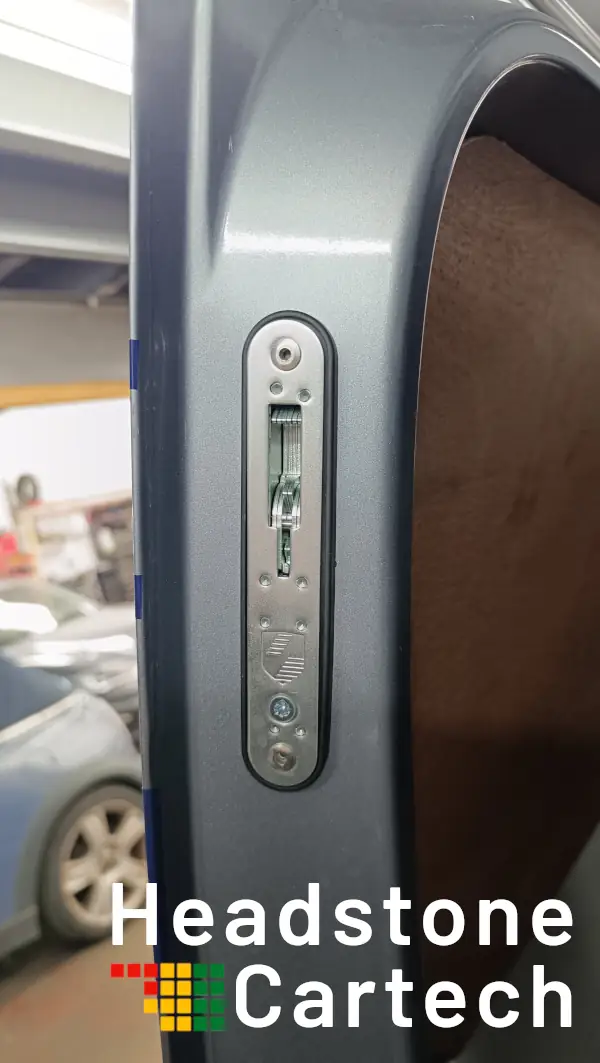
To understand why additional door locks matter for van security, it helps to understand how these attacks actually work. The most widely reported method is the peel-and-steal attack. Rather than picking or drilling the factory lock, thieves use a lever or crowbar to bend the door panel away from the frame. This creates enough of a gap to reach the latch or internal release mechanism. This can be done in under a minute and requires no specialist tools beyond a simple piece of steel.
Side sliding doors and rear barn doors are the primary targets. Industry guidance identifies both as the weakest points on a modern van once cab security has improved. Manufacturers design factory-fitted locks on load bay doors for convenience, not resistance. Avon and Somerset Police confirm in their van security guidance that most thieves can break into a standard van lock. Additional locks are therefore strongly recommended.
Beyond peel-and-steal, load bay doors are also vulnerable to drilling, picking, and jemmying attacks. In each case, the common factor is the same: the factory lock provides a single point of failure. Once it is overcome, the entire load bay is accessible. A layered approach to van door security removes that single point of failure entirely.
Effective van protection works in layers. No single measure provides complete security, but combining several approaches makes your van a far less attractive target. The National Business Crime Centre recommends a combination of additional door locks, internal secure storage, smart parking habits, and tool marking. Together, these form the foundation of good van security practice.
In concrete terms, fitting high-quality aftermarket locks to your load bay doors is the first priority. The doors are the primary attack point. On top of that, parking with your load bay doors against a wall wherever possible removes access entirely. Marking your tools with a unique identifier and registering them makes them harder to sell on and easier to recover if taken. A GPS vehicle tracker adds a further layer by enabling recovery if the van itself is ever taken.
Behavioural changes matter too. The Direct Line survey found that 37% of tradespeople now remove their tools from the van overnight. A further 48% have turned down jobs where the van could not be kept in sight. Whilst those habits reduce risk, they also come at a cost to your business. The stronger your van door security, the less you need to rely on inconvenient workarounds.
Police guidance consistently points to deadlocks and slamlocks as the recommended upgrades for van load bay doors. Avon and Somerset Police's published van security guidance highlights deadlocks, slamlocks, and lock covers or protective plates as the most effective aftermarket additions. These are the three upgrades a van owner should prioritise.
A deadlock operates independently of the van's central locking system. It requires a separate key to engage and disengage. Even if a thief bypasses the factory lock, the deadlock stays active. A slamlock, by contrast, engages automatically the moment the door closes. This makes it particularly useful for tradespeople opening and closing their load bay doors repeatedly throughout the day. There is no risk of forgetting to lock up between jobs.
Hook locks take a different approach. Rather than adding a bolt mechanism, a hook lock uses a hardened steel hook that engages with a reinforced keep. This braces the door against the frame, resisting the prying and levering forces used in peel-and-steal attacks. All three lock types are widely recommended by police, insurers, and trade bodies as practical, proven deterrents.
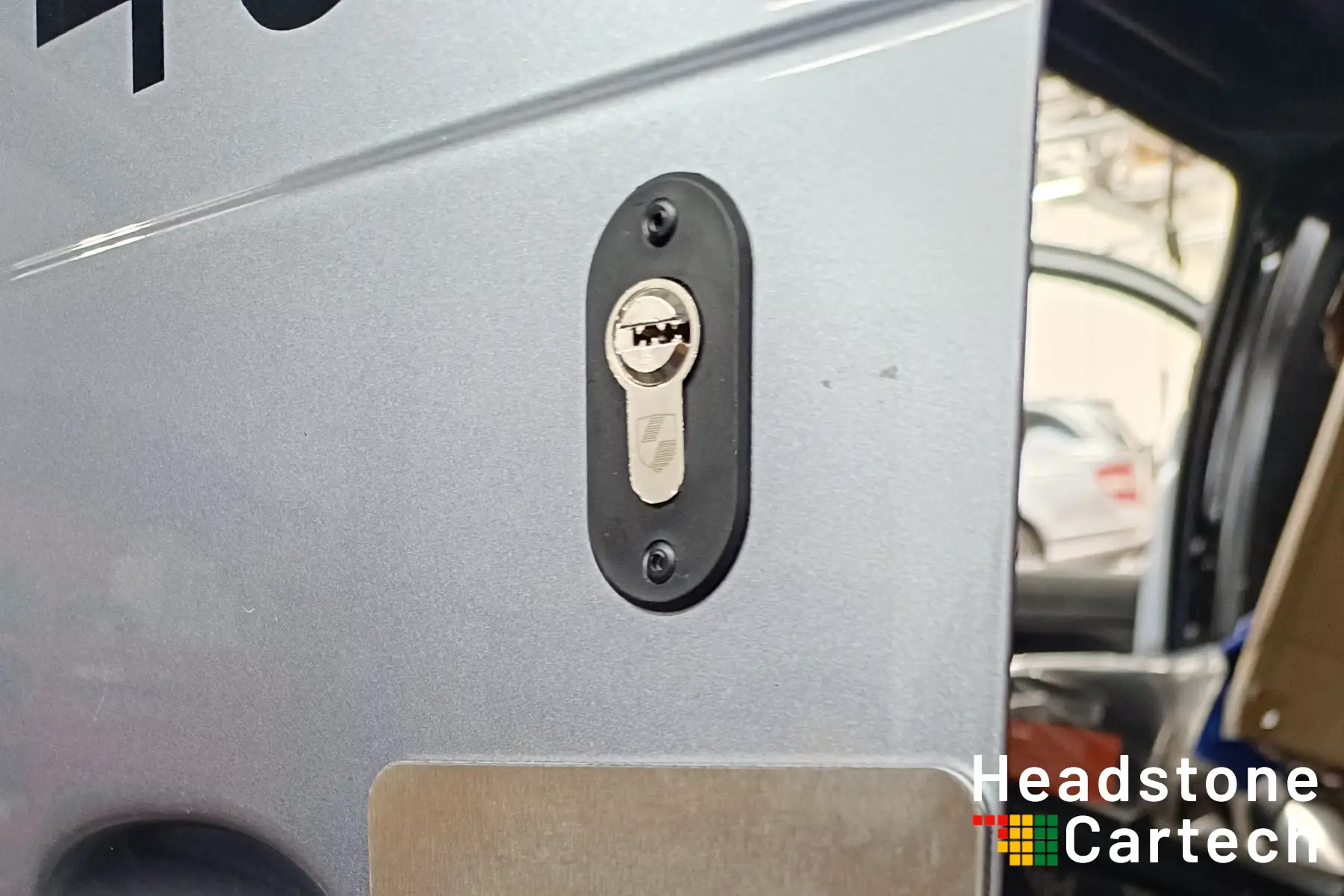
Given the average theft loss of £2,433 and the near-universal downtime that follows a break-in, the return on investment for van deadlocks is straightforward. The cost of having quality van security locks professionally fitted is modest by comparison. Many insurers recognise this and offer premium reductions for vehicles fitted with Thatcham-approved or Sold Secure-rated locks.
Beyond the financial calculation, there is the question of deterrence. Criminals targeting vans are overwhelmingly opportunistic. They are looking for the easiest vehicle on the street, not the one that will take the most effort. A van fitted with visible, high-quality additional locks sends a clear signal that this is not the soft target. As a result, the deterrent effect extends beyond the direct resistance offered by the lock itself; it redirects criminal attention elsewhere.
The data supports this. Simply Business's analysis of claims data linked the shift toward property damage attacks on van doors to improvements in cab security. As cab protection improved, thieves moved to the load bay. The same logic applies to load bay doors: improve the security, and thieves move on to an easier target. For tradespeople who have experienced a break-in, the question is rarely whether deadlocks are worth it. The real question is why they were not fitted sooner.
Manufacturers engineer quality van deadlocks specifically to resist the attack methods most commonly used against load bay doors. High-grade deadlocks incorporate anti-drill, anti-pick, and anti-jemmy features as standard. The cylinder and bolt mechanism resist physical attack through hardened construction. Manufacturers typically shroud or recess the external keyway to prevent direct access.
In practice, a determined and skilled lockpick could theoretically defeat almost any mechanical lock given enough time. The relevant question is not whether a lock is theoretically impregnable. What matters is whether it presents enough resistance to make an opportunistic attack impractical. On that measure, quality deadlocks perform very well. Increasing the time and effort required to defeat a lock dramatically raises the risk of detection. That risk is the primary deterrent against the fast, opportunistic theft that drives the vast majority of van break-ins.
By extension, combining a deadlock with a hook lock and an alarm creates a cumulative barrier. A rapid attack becomes extremely difficult to execute. Each additional layer adds time, noise, and risk for the would-be thief.
There is no single answer. The best setup depends on your van model, how many doors you need to secure, and how you use the vehicle day to day. That said, the most effective approach for tradespeople is almost always a combination of lock types fitted to each vulnerable door.
For rear barn doors, fit a pair of deadlocks or hook locks to both the active and passive leaves. This provides solid resistance against prying and direct attack. For side sliding doors, fitting a deadlock or slam lock at the latch point reinforces the weakest entry point on the vehicle. Anti-peel brackets fitted to the top and bottom of the door frame prevent the panel from being levered away. They add a structural layer of protection that works alongside the locks themselves.
At Headstone Cartech, we supply and fit van security locks across Harrow and North West London. We select the right combination for your specific van and usage pattern. Whatever commercial vehicle you drive, we can advise on the right solution and install it to your load bay doors. You can explore our full van security locks service or get in touch directly to discuss your requirements.
Additional locks on your van load bay doors are the essential first line of defence, but the most resilient setups combine them with additional measures. A professionally installed GPS vehicle tracker provides a recovery capability that locks alone cannot offer. If your van is ever taken, a live-tracking device gives police the best possible chance of locating it quickly. The same applies if contents are stolen during a break-in. Tracker data also supports insurance claims and can help establish the circumstances of a theft.
On top of that, a quality car alarm adds an audible deterrent that complements the physical resistance of your door locks. Most opportunistic thieves abandon an attack the moment an alarm activates. The noise draws attention and cuts the time available to complete the theft. Together, locks, a tracker, and an alarm address prevention, deterrence, and recovery in a single security package.
Many insurers offer premium reductions for vans fitted with Thatcham-approved or Sold Secure-rated van security locks. Aftermarket deadlocks, slamlocks, and hook locks demonstrably lower the risk of a successful break-in. Insurers treat them as a genuine risk reduction, not a cosmetic upgrade. Contact your insurer before and after fitting to confirm any applicable discount. This ensures your policy reflects the upgraded security.
A deadlock requires a separate key to lock and unlock, operating independently of the van's central locking system. You engage it manually each time you close the door. A slamlock engages automatically the moment the door closes, which removes the risk of forgetting to lock up between jobs. For tradespeople who open and close their load bay doors frequently throughout the working day, a slamlock offers a practical advantage. Both types provide a significant improvement over factory-fitted locks. Police guidance recommends both.
Steering wheel locks remain a visible deterrent and can discourage opportunistic thieves from attempting to steal the vehicle. That said, the nature of van crime has shifted significantly in recent years. Whole-van theft has declined sharply as immobiliser technology has improved. The primary threat facing tradespeople today is break-in theft from the load bay, not vehicle theft itself. A steering wheel lock does nothing to protect the tools inside your van. For tradespeople, additional aftermarket door locks address the actual threat more directly.
The cost depends on the lock types you choose, the number of doors, and your van make and model. Some vehicles require more involved fitting work than others. Across the board, the investment is modest relative to the average tool theft loss of £2,433. It is also modest compared to the business downtime and insurance savings that come with approved security upgrades. To get an accurate quote for your specific vehicle, contact Headstone Cartech directly on 020 8863 7188.
The main practical consideration with deadlocks is the additional key operation required each time you lock the van. For tradespeople making frequent stops throughout the day, this adds a small amount of time to each visit. A slamlock removes this inconvenience by auto-engaging on door close. Beyond that, deadlocks must be fitted correctly to function as intended. A poorly fitted lock can introduce weaknesses rather than remove them. Professional installation ensures the lock engages with the correct resistance. It also ensures the fixing points are adequately reinforced.
Whether your policy covers tool theft depends on its specific terms. Standard van insurance does not always include contents cover. Many tradespeople carry no insurance for their tools without realising it. Dedicated tradesperson insurance or a separate tools-in-transit policy typically provides more comprehensive cover. Keep an up-to-date record of your tools, including makes, models, and values, to support any claim. Fitting quality door locks helps demonstrate to your insurer that you took reasonable precautions. This can be relevant if a claim is ever contested.
Inform your insurer whenever you make a significant modification to your vehicle, including adding aftermarket locks. In most cases, insurers view this type of upgrade positively and may reduce your premium as a result. Failing to disclose modifications, even beneficial ones, can sometimes create complications at claim time. A quick call to your insurer after installation keeps your policy up to date. It also confirms whether a discount applies.
Headstone Cartech, based in Harrow, supplies and fits van security locks for tradespeople across North West London. Our service area covers Harrow, Pinner, Stanmore, Wembley, Ruislip, and Watford. We work with all major van makes. Our team will advise on the right combination of deadlocks, slamlocks, and hook locks for your vehicle and working pattern. Call us on 020 8863 7188 or email
Tool theft from vans is not a new problem, but the data from 2024 and 2025 shows it is getting worse. Reported incidents rose 16% in 2025 compared to the previous year, according to a Monster-Mesh FOI analysis across 26 police forces. The shift toward forced-entry attacks on load bay doors means that improved cab security alone is no longer sufficient. The load bay is now the primary target, and factory-fitted locks were never designed to withstand a determined attack.
Fitting quality locks to your van load bay doors directly counters the way these crimes are carried out. It addresses the actual attack method and hardens the actual target. The upgrade is also immediately visible to anyone casing the vehicle.
Headstone Cartech has been supplying and fitting van security solutions in Harrow and across North West London since 2012. To discuss the right van security locks for your vehicle, call us on 020 8863 7188 or email


Headstone Cartech is an independent car accessory specialist in Harrow, London. We offer the latest car accessories, fitting audio systems, trackers, immobilisers and dash cams with care, for drivers in our local community.